Capability 24 · Human System
Face My Shadow
Notice the negative stories and old protective patterns that hijack you under stress, then build the muscle to respond from choice rather than reflex.
Founders say
“I can usually see the pattern afterwards. In the moment, though, it still feels like the safest move.”
Where you are today
- Under pressure, the same reactions keep showing up: control, people-pleasing, criticism, avoidance, rescuing.
- A part of you still believes the old script keeps you safe, even when it now creates tension, delay or distance.
- You explain the pattern as personality instead of seeing it as an adaptation you can work with.
Where you’re headed
- You can name the story or part that is taking over before it runs the meeting.
- You understand what that part is trying to protect, so you respond with less shame and more choice.
- Old patterns still visit, but they stop driving your leadership by default.
Positive Intelligence gives a helpful starting point here: saboteurs begin life as guardians. That is the key. The behaviour is not random or proof you are broken; it solved something once. A people-pleasing response may have been brilliant in a chaotic home because it kept the peace. Years later, the same move shows up in the boardroom and calls itself diplomacy while quietly eroding trust. And notice the hook: "in the moment, it still feels like the safest move" — that feeling of safety is the old guardian talking, not the present situation. The commonest way founders stay stuck is calling the pattern personality: "that's just how I am." It isn't. It's an adaptation, and adaptations can be worked with.
Old protection, new cost
A lot of shadow work gets easier once you see the pattern as old protection. Maybe you became a people-pleaser when the adults around you were volatile and keeping the peace felt essential. Maybe control became your way of staying safe in chaos. Back then, the pattern worked. The issue is not that it existed; the issue is that it stayed in charge long after the original danger passed.
Which is why the work is not to reject that part of you or declare war on it. Underneath almost every shadow pattern is a real strength: the care beneath people-pleasing, the standards beneath criticism, the agency beneath control. Swing to the opposite extreme and you amputate the strength along with the pattern. The move is to make it conscious, thank it for the job it once did, and decide whether it still serves the life and company you are building.
If a pattern feels extreme, traumatic or destabilising, work with a therapist rather than trying to self-coach your way through it from a website.
Spot the loop
A lot of shadow patterns run as loops, not one-off incidents. You set an unrealistic expectation. Sometimes you meet it once and quietly decide that now this should always be normal. Sometimes you miss it, feel the frustration, and reach for a coping move — a drink, numbing out, avoidance, more self-criticism — which makes the next miss more likely. The win is seeing the loop early enough to step out of it.
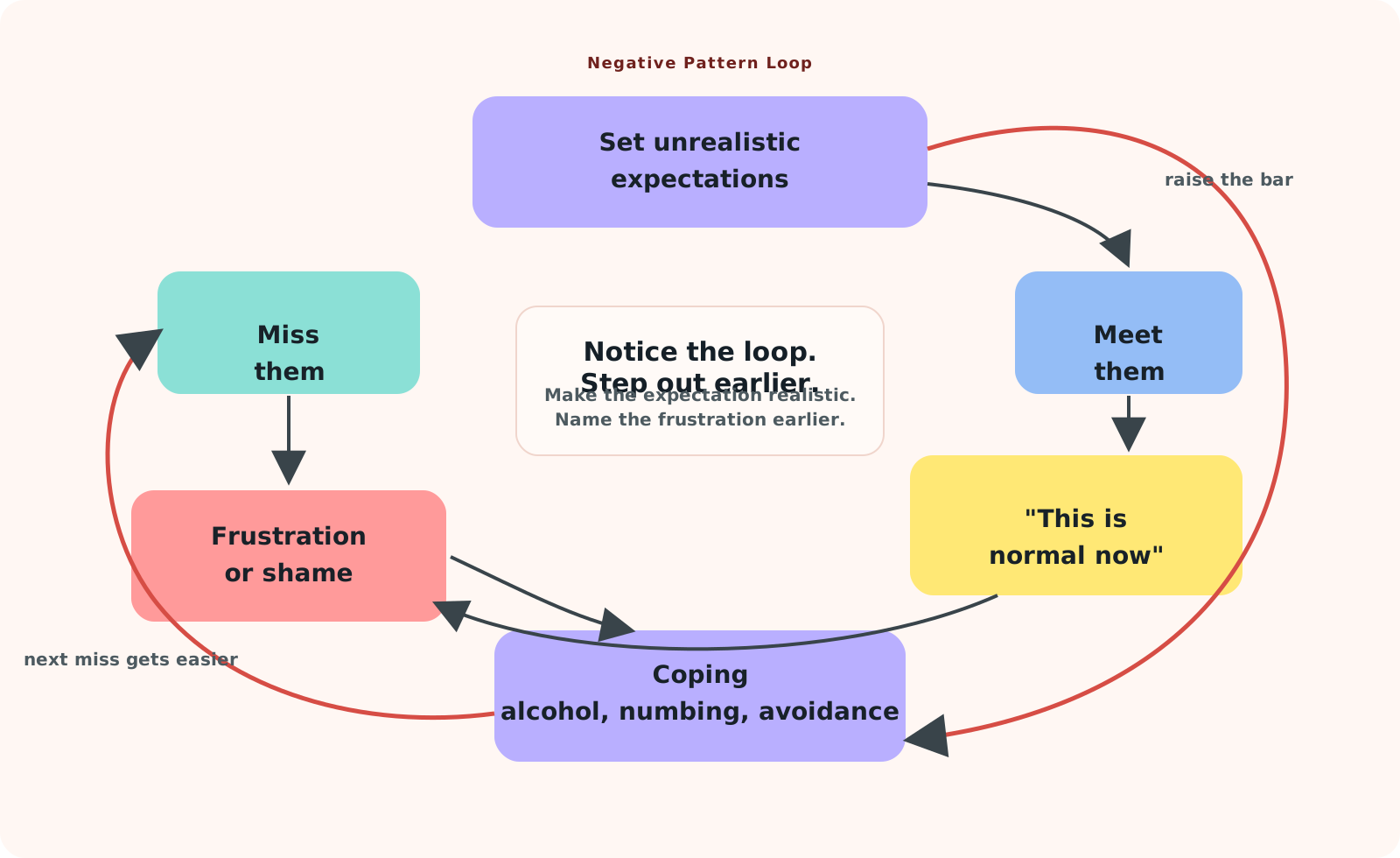
Exit points are simple but not easy: make the expectation realistic, name the frustration before it hardens, and choose a cleaner coping move while the pattern is still small.
Build the noticing muscle
This is a reps game. First the pattern runs unconsciously. Then you notice it after the fact. Then you catch it in the moment and choose differently. Eventually the healthier move gets easier. That is the whole arc: from unconscious incompetence, to conscious incompetence, to conscious competence, and finally to a more natural response.
- Unconscious incompetence: the pattern runs you and you barely notice.
- Conscious incompetence: you spot it, often after the fact.
- Conscious competence: you catch it earlier and choose a better move.
- Unconscious competence: the healthier response starts to feel more like you.
What you can do right now
- Take the Saboteurs Quiz. Use the official Positive Intelligence assessment as a naming device, not a diagnosis. Notice the Judge plus the two or three accomplices that most often hijack you. Saboteurs Quiz →
- Map one overused strength. Pick a genuine strength and trace how too much of it becomes your pitfall, what balancing quality it needs, and what you attack in others when you are triggered. Strength in Shadow →
- Run a Parts Work session. Name three or four of your parts — people-pleaser you, control-freak you, vacation you — give each a voice, and ask what it is trying to protect. Parts Work →
- Install one noticing rep. For the next week, review the last workday and mark where you got overly critical, avoidant or controlling. If you catch it live, do the opposite within the hour: encourage, appreciate, ask the question, or loosen the grip. Habit Stacks →
The toolkit
Work with Ben
Want help installing this?
Outstride OS is the system behind Ben's founder coaching — pre-seed to Series C. If this page names something you are living right now, start a conversation.
Coach rather than founder? I build second brains for coaches.